
Design Guide
Staircase
Lighting
A staircase has two jobs: make an entrance, and keep every step safe underfoot. From KES 1,650. Most Kenyan stairwells need both a statement fixture above and dedicated lighting at step level.
Light & Bath Studio Editorial TeamPublished 15 Sept 2026Updated 24 Oct 20261 min read
The First Decision
Drama above,
safety below.
A double-volume chandelier lights the volume of a stairwell - it's the piece a guest sees first, dropped through the void between floors. It rarely reaches the treads directly below it evenly, though, especially on the lower flights.
That's where step-level lighting comes in - wall sconces or motion-sensor radar fittings mounted along the stair wall. Every serious staircase scheme in Kenya uses both layers together, not one instead of the other.

Three Layers
Building a complete staircase scheme
Most stairwells need all three of these working together, not one alone.

Layer 01
Double-Volume Statement
Chandeliers from KES 45,000
A grand pendant or cluster chandelier dropped through a stairwell void turns a functional space into the first impression of the home. Add the room's length and width in metres for a rough ideal diameter, and keep the lowest point at least 2.1m above the lowest landing.

Layer 02
Wall-Mounted Step Sconces
From KES 3,500
A staircase lit only from above leaves the lower treads in shadow - as much a safety issue as an aesthetic one. Sconces spaced 1.8-2.2m apart along the stair wall, angled downward onto the treads, light every step evenly without glare.

Layer 03
Motion-Sensor Radar Lights
From KES 1,650
Radar-sensor step lights detect movement and switch on automatically before you reach the stairs, then switch off after you pass - no dedicated switch to find in the dark. A practical, low-running-cost layer that works alongside any decorative fixture above.
What to Budget
Staircase lighting prices in Kenya
Budget for at least two of the three layers on this page - a statement fixture rarely covers step-level safety on its own, and step lights alone leave the stairwell feeling utilitarian rather than considered.
Common Questions
Staircase lighting FAQ
As a starting point, add the room's length and width in metres to get the ideal diameter in centimetres - a stairwell void roughly 3m x 3m suits a chandelier around 90-100cm across. The drop should clear the lowest landing by at least 2.1m so it never becomes a headache-height obstacle.
Yes - a chandelier lights the volume of the space but rarely reaches the treads directly below it evenly. Wall-mounted step sconces or motion-sensor radar lights fill that gap, so every step is visible even when the main fixture is off or dimmed.
For night-time safety, yes. Radar motion sensors detect movement through walls and staircases from several metres away and switch on before you reach the step, then switch off automatically - useful for households with children or elderly family members, and it saves on running a hallway light all night.
Space sconces 1.8-2.2m apart vertically along the stair wall so no run of steps is left in shadow. Mount them slightly above handrail height and angle the light downward onto the treads rather than outward into the eyes of anyone climbing.
Motion-sensor radar step lights start around KES 1,650-1,750 per fitting. Wall-mounted sconces for a stair wall run from KES 3,500. A double-volume statement chandelier for the stairwell itself starts from KES 45,000 and scales up with size and crystal detail.

Studio Service
Not sure what your stairwell needs?
Our designers check ceiling height, void size and wall runs, then specify the right combination of statement and step lighting before you spend anything.
Keep Reading
Related Guides

Outdoor Lighting in Kenya
Bollards, wall washers and garden lighting that survive the rains.
Read the guide
Wall Lights in Kenya
Indoor sconces and outdoor wall lights, IP-rated where it matters.
Read the guide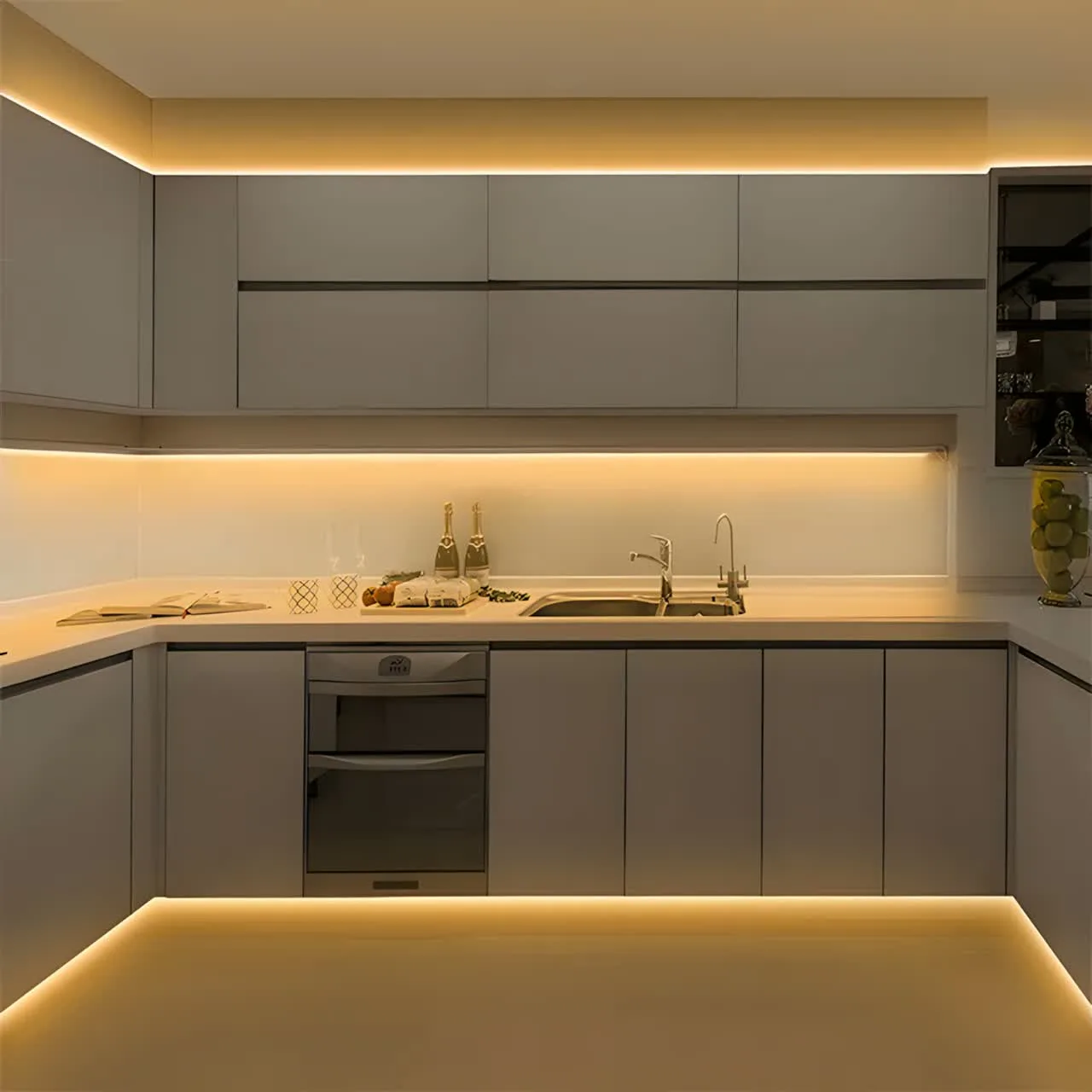
LED Strip Lighting in Kenya
COB, SMD and neon flex strips for cove and accent lighting.
Read the guide